


As declared by UNESCO, presently there are seven World Heritage Sites in Sri Lanka. These range from ancient cities like Anuradhapura to Sinharaja rainforests.
Sacred City of Anuradhapura:
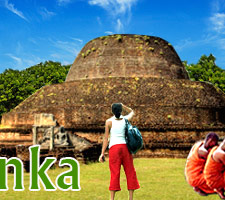
Anuradhapura is acclaimed as the greatest monastic city of the ancient world and has served as the royal capital of 113 kings. Located in the North-Central part of the island, Anuradhapura was originally founded by a King's minister named Anuradha in 500 BC. The 'tree of enlightenment'-the Buddha's fig tree-brought there in the 3rd century B.C. by Sanghamitta was planted in Anuradhapura. The city flourished for 1300 years. In 993 AD, Anuradhapura was fought over and abandoned when the capital was moved to Polonnaruwa. Hidden away in dense jungle for many years, the splendid site, with its palaces, monasteries and monuments, was re-discovered in 19th century and is now accessible once again.
Ancient City of Polonnaruwa:
Polonnaruwa was the second capital of Sri Lanka after the destruction of Anuradhapura in 993. In its time, a 6 km rampart protected the city. Even during the time when Anuradhapura was the capital Polonnaruwa was an important city because it strategically commanded all the crossings over the Mahaveli River and acted as a buffer against the invading armies. It comprises, besides the Brahmanic monuments built by the Cholas, the monumental ruins of the fabulous garden-city created by Parakramabahu I in the 12th century.
Ancient City of Sigriya:
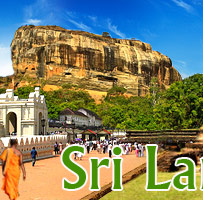
Sigiriya was the capital city, built by parricidal King Kasyapa who reigned from 477-495 AD. The ruins of the city lie on the steep slopes and at the summit of a granite peak standing some 370 m high. The rock was transformed into a recumbent lion, which dominates the jungle from all sides. A series of galleries and staircases emerging from the mouth of a gigantic lion constructed of bricks and plaster provide access to the site.
Sacred City of Kandy:
Kandy is also known as the cultural capital of Sri Lanka. This sacred Buddhist site, popularly known as the city of Senkadagalapura, was the last capital of the Sinhala kings. It is also the site of the Temple of the Tooth Relic (the sacred tooth of the Buddha), which is a famous pilgrimage site.
Golden Temple of Dambulla:
Dating back to the 1st Century BC, this is the most impressive cave temple in Sri Lanka. The cave monastery, with its five sanctuaries, is the largest, best-preserved cave-temple complex in Sri Lanka. Inside the caves, the ceilings are painted with intricate patterns of religious images, following the contours of the rock. There are images of the Lord Buddha and bodhisattvas, as well as various gods and goddesses.
Old Town of Galle and its Fortification:
The port town of Galle is Sri Lanka's fourth biggest town with a population of around 1lakh. The town was founded by the Portuguese in 16th century. In 1598, the Portuguese built a small fort which was later extended. However, when the Dutch took over in 1640, they destroyed all traces of the Portuguese presence. In 1663, the Dutch built the 36-hectare Fort, which is now a World Heritage Site. Galle is the best example of a fortified city built by Europeans in South and South-East Asia, showing the interaction between European architectural styles and South Asian traditions.
Sinharaja Forest Reserve:
Sinharaja is Sri Lanka's last existing tropical rainforest. More than 60% of the trees are endemic and many of them are considered rare. There is much endemic wildlife, especially birds, but the forest is also home to over 50% of Sri Lanka's endemic species of mammals and butterflies, as well as many kinds of insects, reptiles and rare amphibians.
There are seven World Heritage Sites in Srilanka
Home: World Heritage Sites in Sri
Lanka


